
Select categoty / subcategory:

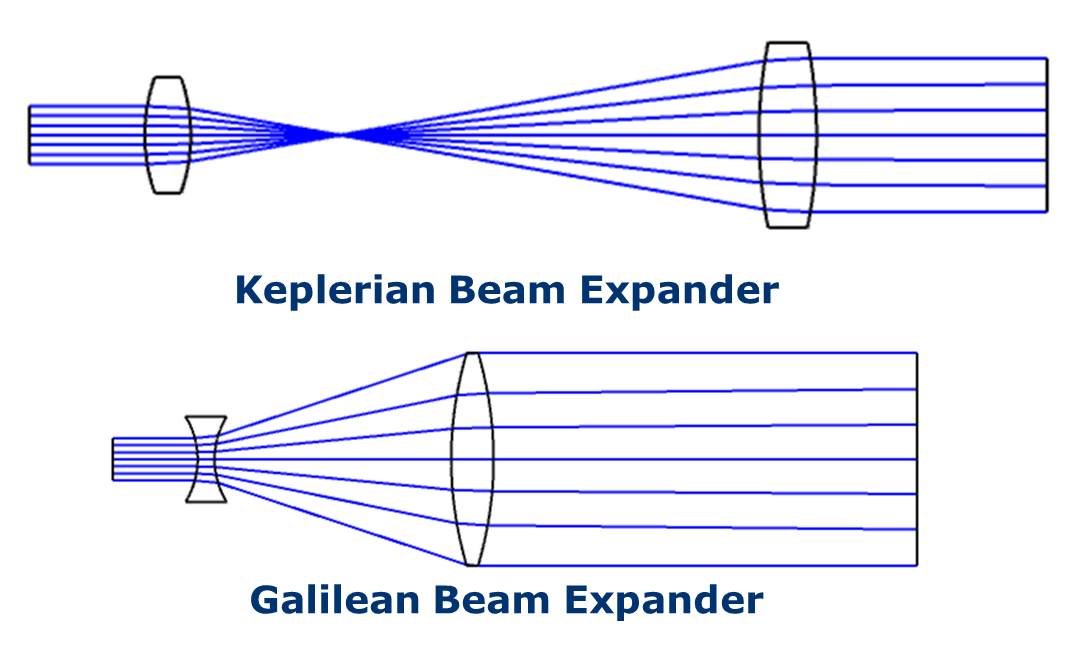
Why a Larger Beam Results in a Smaller Spot Size in Laser Designation?

In that blog post we cited NATO standard STANAG 3733, which required that the laser beam have a divergence small enough so that 90% of its energy is on target 95% of the time assuming a 2.3 x 2.3 m target.  We went on to explain that most laser designators are designed to be used at distances up to 5 km.  Therefore, one of the most critical factors when choosing a laser source is the beam d… Read More
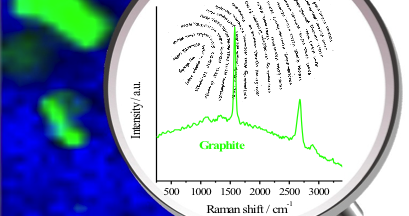
Picosecond Lasers for High-Resolution Raman Spectroscopy

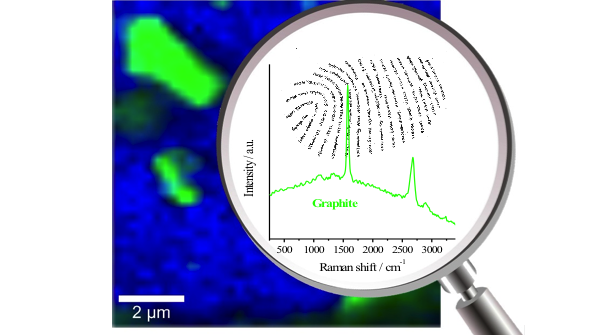
Spectroscopy is a class of analysis methods meant for chemical species identification and concentration measurement, based on emission spectra detection, if irradiated by an adequate light source. Fluorescence-based spectroscopy is one of the oldest spectroscopic techniques. This technique utilizes electron-photon interactions and relies on the absorption of high-energy photons and the subsequent emission of lower-energy, longer-wavelength fluorescence photons, with the energy difference associated with vibrationa… Read More

Why is a Low Jitter Feature Important in Actively Q-switched DPSS Lasers?

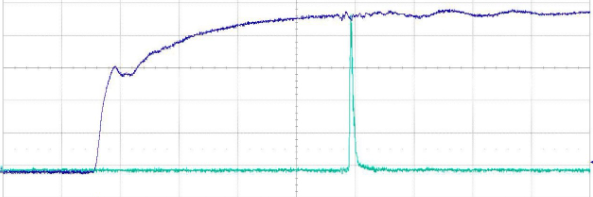
In actively Q-switched lasers, the user controls the pulsed laser output, so that no laser pulse emission occurs without providing a proper input signal, aka “the trigger”. Due to the trigger signal propagation through the interface electronics, the Q-switch driver chain, and the laser resonator build-up time, a time delay (Td) is present between the externally-supplied trigger signal and the actual laser pulse emitted by the laser source. The Td can show fluctuations if any electronics or optics involved in the pulse generation process have a functional varianc… Read More

OEM Fiber Lasers for Industrial Laser Induced Breakdown Spectroscopy

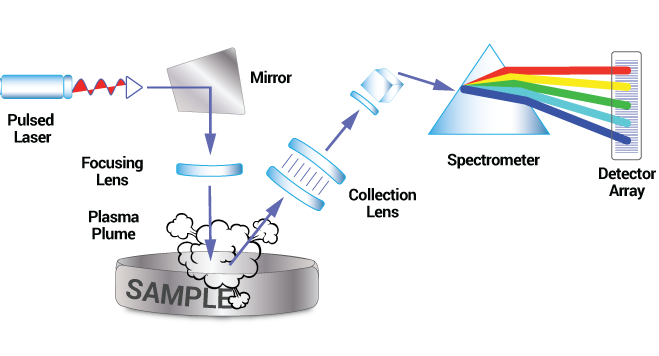
Industrial laser induced breakdown spectroscopy typically involves the elemental analysis of various metals. In our previous application note titled “Laser Induced Breakdown Spectroscopy (LIBS) in Biomedical Applications,” we discussed the fundamentals of the technique, emphasizing the use of q-switched diode-pumped solid-state lasers as the excitation source. In this blog post, we are going to explore the possibility of utilizing nanosecond pulsed fiber lasers as the excitation source. We will also discuss the pros and cons of that approach, specifically for the characterization of metals and metal… Read More

Laser Induced Breakdown Spectroscopy (LIBS) in Biomedical Applications

The popularity of laser induced breakdown spectroscopy (LIBS) has been rapidly growing since its introduction in the 1960s, and is now used in industrial, military, scientific, and medical applications. Nowadays LIBS is rapidly becoming an indispensable tool for elemental analysis and is generally viewed as a complementary technique to other elemental methods such as mass spectrometry. Within the medical field, LIBS can be used for analyzing hard/calcified tissues, soft tissues, biomedical specimens; as well as disease detection and even during laser-guided surgery. In this a… Read More

Laser Texturing with Fiber Lasers

Injection molding is a widely used process for rapidly mass-producing low cost highly uniform mechanical parts.  On a cursory level, it is a relatively straight forward process by which molten material (metal, glass, polymer, etc.) is injected into a hollowed-out cavity, cooled down to solidify, and then ejected.  This results in the material being permanently shaped to the internal cavity of the mold.  This process has been around for hundreds if not thousands of years with the original molds being made out of clay and then broken apart to reveal the fini… Read More

HeNe Lasers VS Diode Lasers: HeNe Laser Pros and Cons

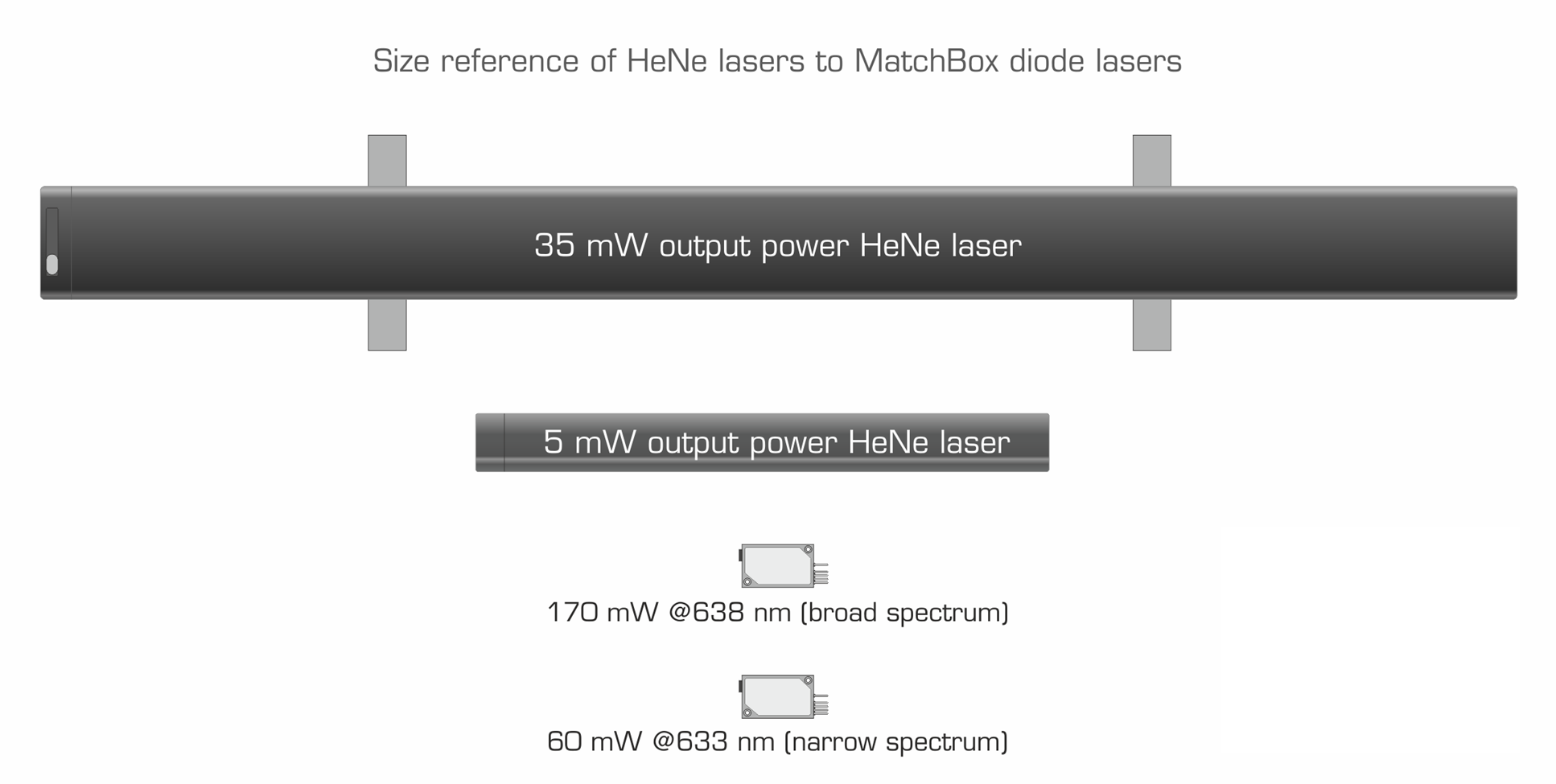
Historically, Helium-Neon (HeNe) lasers were often the first choice for precision instrumentation, measurement setups and some spectroscopy applications. It was invented in 1960 and technologically it was one of the first lasers with extraordinary good parameters. The mechanical and optical design is quite simple (apart from sophisticated glasswork to make the tube itself) but the gas lasing medium and overall construction provide some intrinsic advantages. But also a number of disadv… Read More

Laser Alignment: HeNe Lasers, Methods, and Helpful Tips

Laser alignment can be a challenging task, but aligning a laser beam doesn’t have to be as complicated as it might seem with the right tools and proper techniques. Multiple tried-and-true methods have been developed over the years, utilized by technicians and engineers to simplify the alignment process. With the development of these methods, along with some tips and tricks, you don’t need to be a laser expert to perform your alignments with relative ease, ensuring your laser path is right where you want it to be and your beam is on target e… Read More

The Influence of Laser Wavelength on Raman Spectroscopy

As discussed in previous posts, Raman spectroscopy is a rapidly growing analytical technique used in a wide variety of industries for material identification, but with so many different laser options it can be somewhat challenging to understand which laser is best for which application. To help elevate some of the confusion around this issue, we released an application note this past August titled “Multi-Mode vs. Single-Mode Lasers for Raman Spectr… Read More

Multi-Mode vs Single-Mode Lasers for Raman Spectroscopy

Raman spectroscopy is one of the fastest growing and most diverse applications in all of laser spectroscopy.  As a result, it can be rather challenging at times to sift through the wide-ranging laser options all being marketed for Raman spectroscopy.  In this application note we will tackle one of the most common questions that arises when picking a laser for Raman spectroscopy; “Should I chose a single-spatial mode or multi-spatial mode laser for my application?”  On the surface, this seems like a simple question since Raman is a nonlinear optical effect and therefore the tighter the beam can be focused the higher the conversion efficiency.  Seemingly a single-mode laser would be preferable, but in practice there are other factors that can complicate … Read More

What is Laser Amplifier Noise?

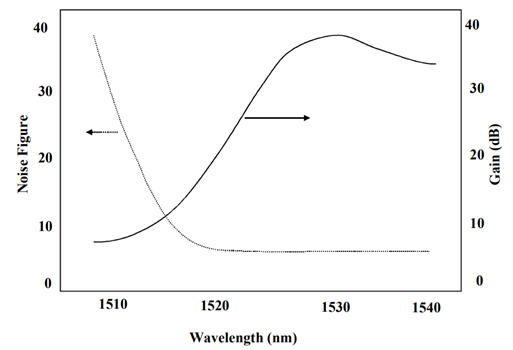
Laser amplifiers are an invaluable tool because they allow for a laser’s power to be increased while maintaining its basic spectral properties. In principle laser amplifier noise is no different than the amplifier noise induced in an audio system, and just as in a home stereo system the quality of the amplifier will have a tremendous effect on the quality of output signal.  Therefore, in this post we will attempt to answer the question what is laser amplifier noise, and perhaps more importantly how amplifier noise can affect the overall performance of yo… Read More

MWIR-LWIR QCL Wavelength Range: 10-17um for Molecular Spectroscopy!

Mid-IR molecular spectroscopy is a rapidly developing and promising technique, enabling high-performance chemical detection and analysis for industrial or environmental purposes, with new wavelength ranges becoming commercially available. The essential component for such applications is the laser source, adapted to the specific spectral lines (the fingerprint) of the target molecule. Quantum Cascade Lasers (QCLs) are a perfectly suited solution to build such analysis… Read More

Laser Diode Fundamentals: What are Longitudinal Modes?

Laser diodes must meet two critical requirements to facilitate the lasing process. The first requires that, at a minimum, the laser cavity’s gain increases to the point that it reaches unity with the level of losses. This unity state is known as the gain threshold. The second requirement is that there must be a longitudinal mode present inside the optical cavity, coinciding with the laser’s gain curve. This article explores precisely what longitudinal modes are and how they affect the laser diode’s pe… Read More

Laser Diode Fundamentals: Diode Gain Threshold

For any laser to function, there must be more gain inside the laser cavity than loss, and the point at which the laser gain is just large enough to overcome the cavity loss enabling lasing is called gain threshold.  While simple, in theory, this concept of gain threshold can be particularly challenging to understand, particularly when it comes to diode lasers.  Therefore, as part of our ongoing blog series expanding on the topics covered in our Lasers 101 section, we are going to explore the concept of laser diode gain threshold in this … Read More

TO-Can Laser Diode Heat Dissipation

When operating a laser diode, proper thermal management is critical to avoid damage. A few key aspects to consider are the generation and dissipation of waste heat, laser diode operating temperature, and proper heatsinking. This article will focus on TO-Can packages, giving consideration to these key aspects and providing useful information for proper thermal m… Read More

Laser Diode Fundamentals: Beam Properties

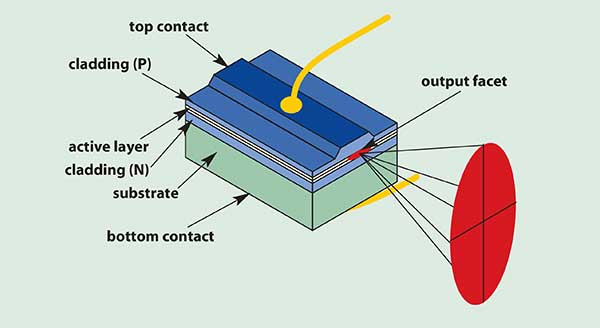
Whether a diode laser is a traditional monolithic design or utilizes an external cavity configuration, the laser light must still propagate through the diode’s PN-junction via a ridge waveguide.   As a result, the beam profile of edge emitting diodes is unique when compared to all laser sources because of the asymmetric geometry of this optical cavity.  This issue often leads to confusion about how to properly integrate open beam laser diodes into yo… Read More

What is Single Longitudinal Mode

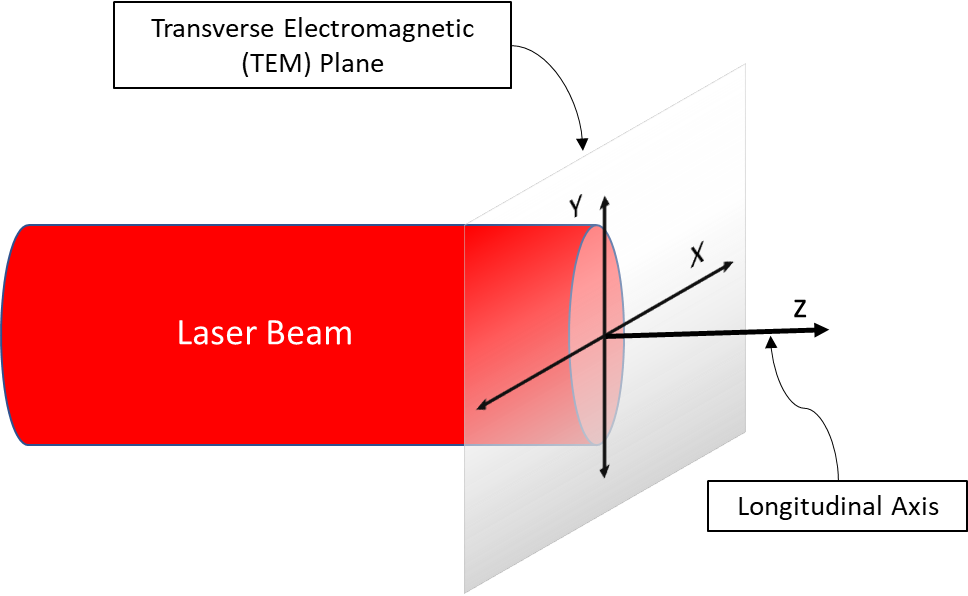
Within the laser community, one of the most overused and often miscommunicated terms is the phrase “single mode.”  This is because a laser beam when traveling through air takes up a three-dimensional volume in space similar to that of a cylinder; and just as with a cylinder, a laser beam can be divided into independent coordinates each with their own mode structure.  For a cylinder we would call these the length and the cross-section, but as shown in the figure below for a laser beam, we define these as the transverse electromagnetic (TEM) plane and the longitud… Read More

Space-Qualified Laser Diodes: Development, Qualification & Acceptance

For many years, space applications have steadily increased the utilization of laser diodes for various instruments (mainly pump sources for solid-state lasers). Because of this, organizations have developed qualification methodologies to ensure high levels of quality, performance, and lifetime. In recent years, increasingly complex scientific payloads have required more precise lasers for metrology, calibration, and environmenta… Read More

Understanding Laser Diode Lifetime

In October of 2017 RPMC Lasers, published a white paper titled “How to Improve Laser Diode Lifetime! Advice and Precautions on Mounting,” where we went on to describe in great detail the various package types and the best practices for ensuring the laser diode are appropriately heat sunk. In light of extreme interest in this topic, we have decided to expand on this topic with this application note by discussing how electrical, electro-mechanical, environmental, and optical properties also affect the diode … Read More

World’s Smallest OEM Laser Sources for Portable, Handheld Applications

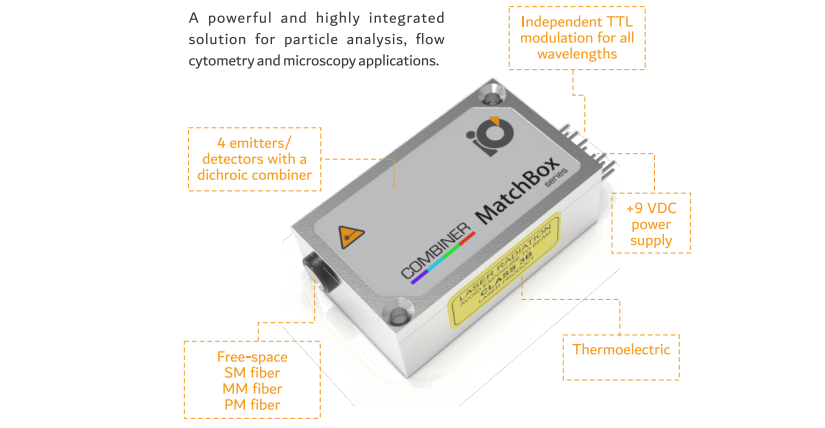
We provide a huge range of configurations for the ‘World’s Smallest’ DPSS & Diode Lasers and Multi-Wavelength Combiners. The low cost, lightweight & ultra-compact footprint, USB power, and other features, make these lasers and multi-wavelength combiners perfect for any kind of portable, handheld applications, whether out in the field, or for efficient and convenient use in the lab, receiving center, incoming inspection, or anywhere you nee… Read More

New Dual-Wavelength Raman Probe Enhances Flexibility & Throughput

Raman Spectroscopy has become increasingly popular in recent years. With more demand for this application, some companies have strived to make advancements to the associated technology and hardware, in an effort to provide better results, more throughput, increased flexibility, and a reduction in total footprint of these devices. This Raman Probe provides great flexibility with configurable optics and advanced features like dual-wavelength capability using only one spe… Read More

Custom, Integrated System Platforms for Customer-Specific Applications

In business for over 20 years, with nearly 10,000 units fielded to date, the experts at Bright Solutions provide a world-class level of quality, customer care, and service. Their wealth of knowledge in laser engineering and applications experience has led to the development and continuous improvement of multiple series of high-quality custom DP… Read More

Want to Minimize Your LIDAR Footprint, Cost, and Energy Consumption?

We have written several articles about various forms of LIDAR and the laser requirements needed to ensure a successful application. In this article, we are going to compile and briefly review some of this previously covered material. Then we will cover some benefits of choosing compact fiber lasers over some of the other options for your LIDAR ap… Read More