
Select categoty / subcategory:

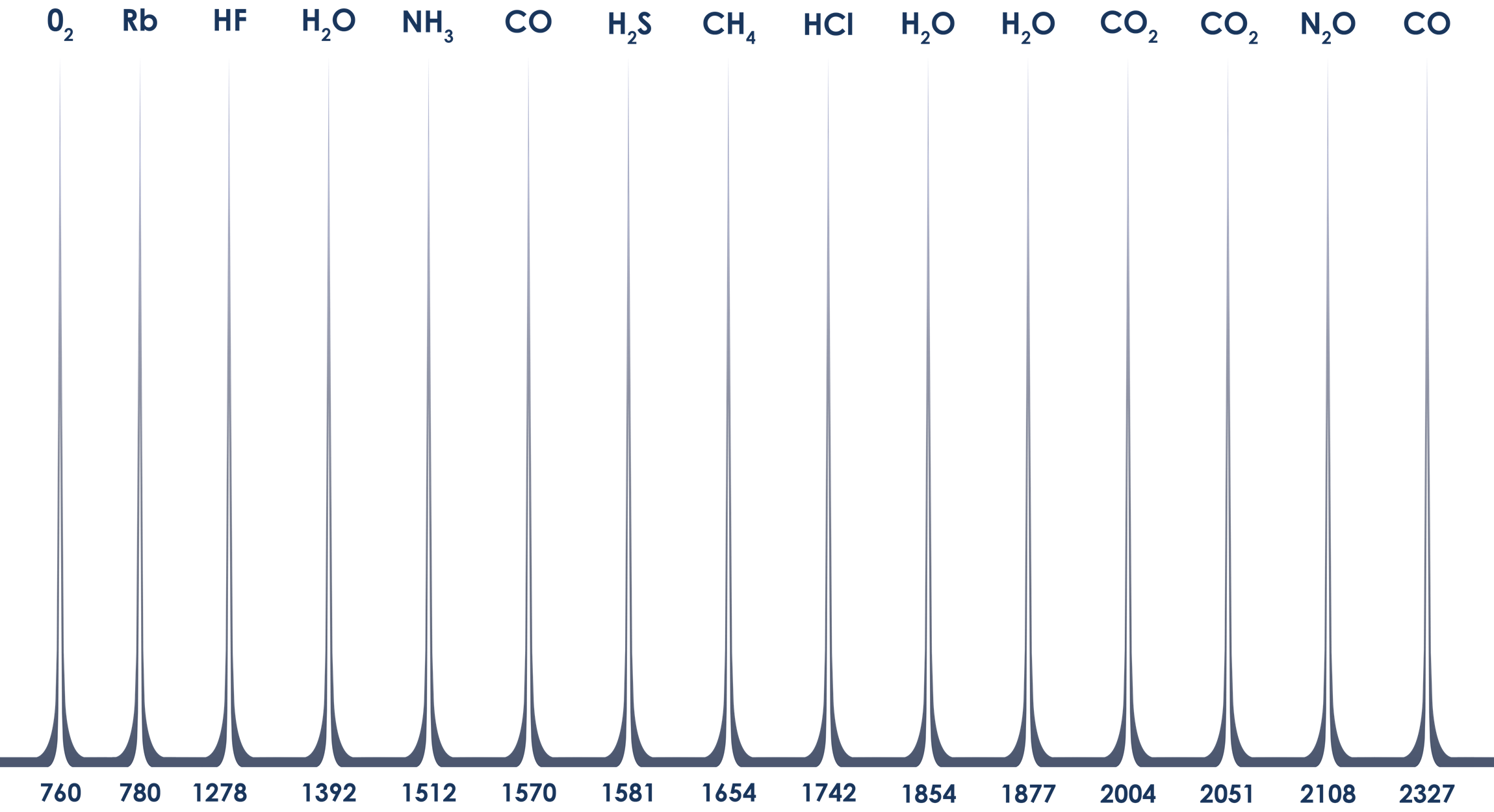
Laser Diodes for Gas Sensing: Mode-Hop-Free Tunability With High SMSR

Single-frequency lasers have long been the cornerstone of standoff gas detection applications, particularly in traditional LIDAR (Light Detection And Ranging), DIAL (Differential Absorption LIDAR), and TDLAS (Tunable Diode Laser Absorption Spectroscopy) applications, where the sample needs to be accurately measured.  More recently, as single-frequency laser diodes have become more common and less expensive, with a larger measurement range and compact size, they are being utilized in more localized and industrial gas sensing app… Read More

QCLs & New Low-Cost IR Sensors Open Door for Many OEM Opportunities

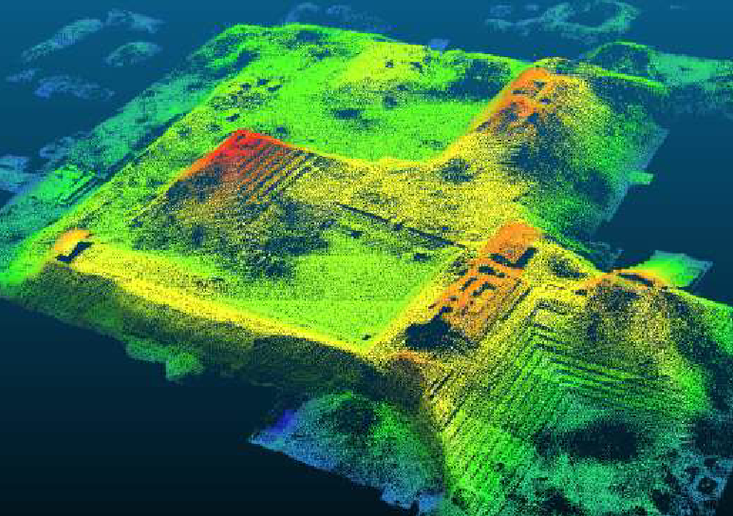
Driving a vehicle at night or during foggy conditions can be tricky and dangerous, where poor visibility can cause undue stress or even an accident. These conditions make it more difficult to see upcoming potential obstacles, especially if that obstacle is a deer in a field or a pedestrian in dark clothing at night. However, thanks to newer, more efficient, and cost-effective advancements, we could see more widespread deployment of LIDAR-based automotive detection and warning… Read More

MWIR & LWIR QCLs Enable Efficient & Cost-Effective Material Characterization

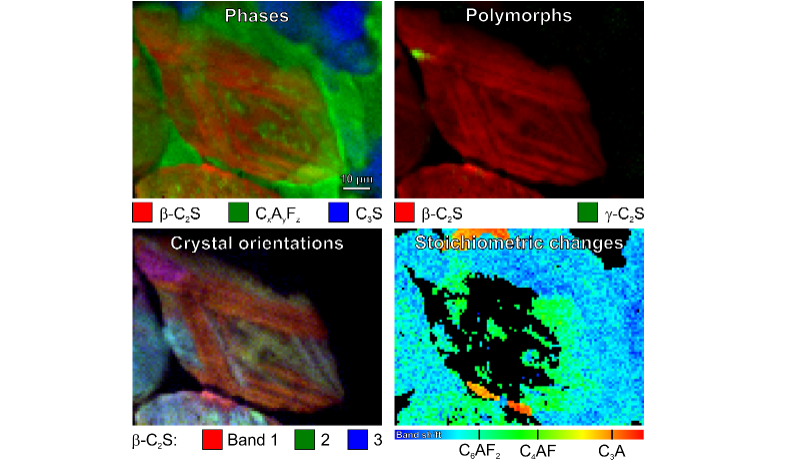
In this case study, we explore how Johan Petit, a research engineer at ONERA, overcame the challenges of material characterization in the mid-wave to long-wave infrared spectrum. Faced with budget constraints and the need for specific laser wavelengths, Johan turned to Quantum Cascade Lasers (QCLs) from mirSense. This cost-effective solution not only met his project requirements but also offered room temperature operation and compact, turnkey usability, proving QCLs to be an ideal laser source for such app… Read More

Blue Diode Lasers Enable High-Quality Non-Ferrous Metal Welding

Blue diode lasers have recently become known as an excellent tool for certain processing techniques regarding copper and other non-ferrous and highly reflective metals. Copper, gold, aluminum, and certain other metals absorb blue wavelengths more easily than any other wavelengths of visible or invisible light. This higher rate of absorption allows for both higher quality results and faster processing times, when typically, there is a trade off between quality … Read More

Unprecedented QCL Wavelengths for Enhanced Molecular Spectroscopy!

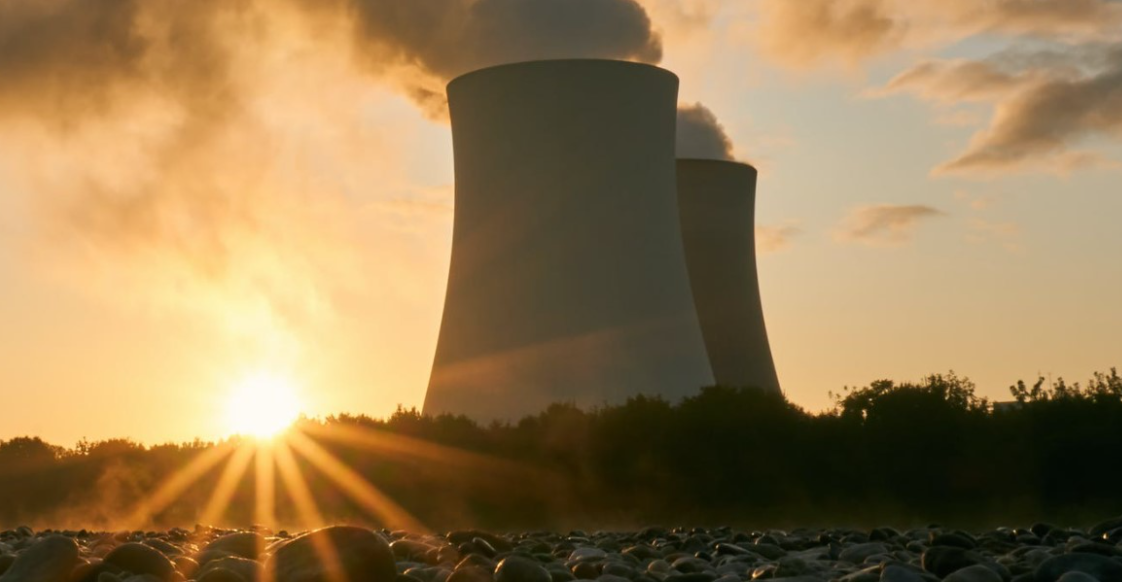
Steady growth in the nuclear industry has led to an increase in demand for more accurate, efficient, and reliable detection and monitoring of critical compounds, like Uranium hexafluoride (UF6) assay or Methyl Iodide (CH3i). This has led to the development of new technologies, enhancing the capabilities of molecular spectroscopy. Entities worldwide are developing advanced spectroscopy-based technologies and methods, aiming to decrease accidents with better safeguards, enable the rapid and precise assessment of nuclear plant … Read More

How Will THIS Homogenized ‘Stub Laser’ Save You Money & Space?

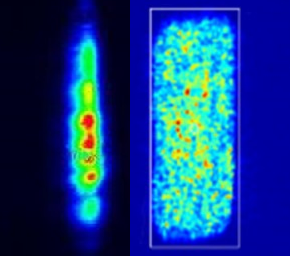
It is well known that the output beam characteristic of a multimode laser diode is inherently non-uniform, due to both spatial and temporal variations of the mode profile, that result from thermal lensing and filamentation. These non-uniformities (‘hot-spots’ and ‘dark-spots’) can lead to deleterious effects for many applications, including solid-state laser pumping, Raman spectroscopy of sensitive materials, laser speckle contrast imaging, and laser ill… Read More

How Are VCSELs Contributing to the Evolution of Solid-State LiDAR?

LiDAR is a critical component of ADAS (Advanced Driving Assisting System), AVs (Autonomous Vehicles), and industrial automation systems. Highly efficient VCSELs (vertical-cavity surface-emitting lasers), with their tiny footprint, attractive pricing, and remarkable reliability and performance, will undoubtedly have an increased positive effect on the LiDAR industry. 100% solid-state LiDAR systems show great potential as the next evolution in LiDAR technology, aiming to replace traditional bulky and expensive mechanical spinning and microelectromechanical systems LiDA… Read More

How Does Concatenation Enhance Raman Spectroscopy?

In this blog, the concept of “Raman Concatenation” is explained as a measurement technique utilized to overcome many of the previously outlined trade-offs. In general, many Raman measurements suffer from fluorescence, which forces the use of longer excitation wavelength (lower photon energy) lasers to prevent the fluorescence signal from overwhelming the Raman signal. However, this results in reduced sensitivity of low-cost silicon CCD detectors at higher wavenumbers, making it difficult (or impossible) to observe the “stretch” portion of the Raman spectra (i.e. 2000 – 4… Read More

How Can We Help Your Gas Sensing and Other Applications Succeed?

Single-frequency lasers have long been the cornerstone of standoff gas detection applications, particularly in traditional LIDAR (Light Detection And Ranging), DIAL (Differential Absorption LIDAR), and TDLAS (Tunable Diode Laser Absorption Spectroscopy).  More recently, as single-frequency laser diodes have become more common and less expensive, they are being utilized in more localized and industrial gas sensing app… Read More
Highly Efficient and Passively Cooled Next-Gen 275W Diode Laser

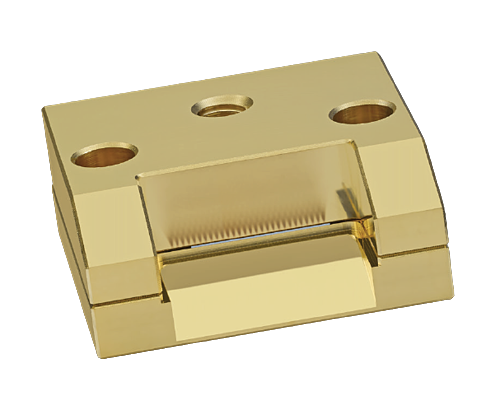
Jenoptik is now offering the JOLD-275-CPNN-1L, their latest development in the field of high-power laser sources for industrial material processing, medical, and life science applications. Thanks to Jenoptik’s patented mounting and bonding technology, this new, passively cooled diode laser is able to achieve extremely high performance in hard pulse and CW applications. Jenoptik also utilizes the efficient and high-performance semiconductor materials they produce themselves to manufacture their high-power las… Read More

The three most common mistakes when mounting and heatsinking a TO-can

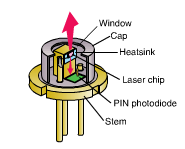
Diode lasers come in a wide variety of packaging configurations. Each package type provides different pros and cons when it comes to beam delivery, heat sinking, integration, and so on.  The two most common packages for what we call “component level” diode lasers are the TO-can and the 14-pin butterfly package.  While there are some exceptions, in general, the TO-can is the preferred packaging for open beam laser delivery, and the butterfly is preferred for fiber-coupled beam d… Read More

Choosing the Right Connector for Your Fiber-Coupled Laser Diode

Having trouble deciding which fiber-coupling connection is best for you? Check out our newest white paper, titled “Choosing the Right Connector for Your Fiber-Coupled Laser Diode.”  In this paper, we review: Pros and cons of the most common fiber optic connectors and the Importance of the self-centeri… Read More

Why should single-mode fibers have an angle polished?

When you look through a window at night and see your reflection, that is because on average 4% of the incident light is reflected at the interface between air and glass.   While 4% may seem like a small amount when dealing with lasers, a 4% back reflection can have more than enough power to destabilize or even permanently destroy the laser.    If the laser beam is perfectly aligned through the system, so too will the back reflections be perfectly aligned to go back into the las… Read More

Why Shouldn’t You Voltage Drive a Laser Diode?

Electric power is determined by the product of the voltage and current supplied to a device. As a result, when designing an adjustable power supply, one of those two parameters must be variable, and the other constant if you want to be able to tune the power supply to your desired output. These two types of supplies are known broadly as constant current (CC) and constant voltage (CV) output circuits. When driving a laser diode, both CC and CV power supplies have pros and cons, but the rule of thumb is that you should always use a CC supply and never… Read More

Why are single-emitters winning over bars

Ever since the industrial fiber laser boom in the early 2000’s, there has been an ongoing debate about the most efficient way to produce high power, fiber-coupled, diode pump lasers. At its root, this debate comes down to the question of single-emitters versus diode bars. While single-emitters cannot come close to the power levels produced by diode bars, typically only producing a few watts of output power, they have several advantages over bars that make them far more desirable for systems in… Read More

How to get the right laser spot at the right distance? – Part 2

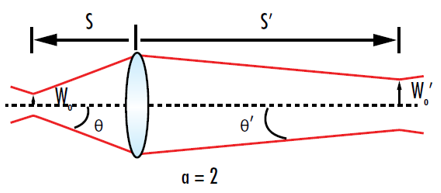
In part one of this blog series, we set out to answer the question of “how to get the right laser spot at the right distance?”  As we went on to explain, this simple question doesn’t have a simple answer, especially when we are talking about single-mode fiber optics.  In that post, we took the time to go through
an introduction of Gaussian beam optics and provided a few examples of how that can be used to determine the lens you need to choose for a given spot size.  In part two, we are going to explore the far more straightforward case of imaging a multi-mode las… Read More

RPMC Offers New Homogenized Diode Laser for Raman Spectroscopy

RPMC is proud to announce the release of their new Homogenized Multi-Mode 14-Pin BF Diode.  This multi-mode, wavelength stabilized laser features high output power with low power consumption and narrow spectral bandwidth. Another exciting feature is the shaped and homogenized beam profile, which evenly spreads out the power density and shapes the beam to match the field of view of a camera. The Homogenized Multi-Mode 14-Pin BF Diode is designed to replace expensive DFB, DBR, fiber, and external cavi… Read More

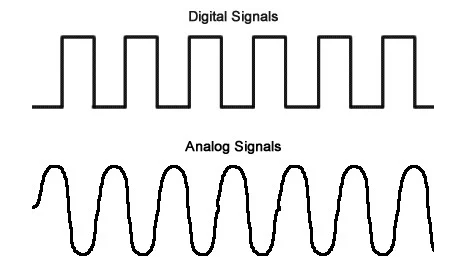
Analog vs. digital modulation – Which is better for you?

For people without a background in electrical engineering, understanding the finer details of analog and digital modulation can be quite challenging.  This is compounded by the fact that most texts on the subject already assume that the reader has a working knowledge of linear systems and Fourier analysis, which can be a significant obstacle for most. Therefore, it is no wonder that one of the most frequently asked questions we get here at RPMC, is “should I use analog or digital modu… Read More

Pros & Cons of Pigtailed Laser Diodes vs. Detachable Fiber Coupled

Approximately half of the laser diodes that we provide here at RPMC Lasers are fiber-coupled.  For this reason, we have decided to build upon our recent two-part blog on fiber coupling in our Laser Diode Fundamentals series by exploring the differences between pigtailed laser diodes and fiber-coupled laser diodes.  To understand the differences, first, it is helpful for us to review core diameter, which is an important principle discussed in the first part of our fiber coupling series. When thinking about a fiber’s core, it is useful to separate them into two different categories single-mode and … Read More

How Removing the TEC Increases Laser Diode Stability

As most people already understand, a laser diodes performance is highly dependent on its operating temperature, which is why most mid- to high-end laser packages utilize embedded thermoelectric coolers (TECs).  The strong temperature dependence arises from two fundamental properties of the diode itself.  First, as the temperature of the semiconductor varies, it’s gain band shifts up or down, this is known as redshifting and blu… Read More

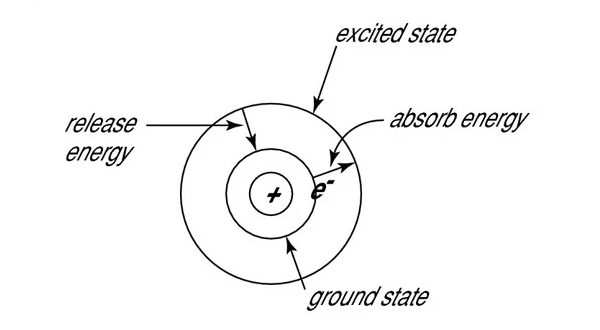
Laser Diode Fundamentals: Bandgap Energy and Wavelength

Diode lasers are unique amongst most other laser sources for their extensive range of available wavelengths.   The breadth of output wavelengths has allowed diodes to become one of the most versatile laser sources, with wavelengths available from ultraviolet to the infrared.  To understand why semiconductor diodes have such a wide range of wavelength options, we must first take a look at the underlying physical principles behind energy levels and stimulated… Read More

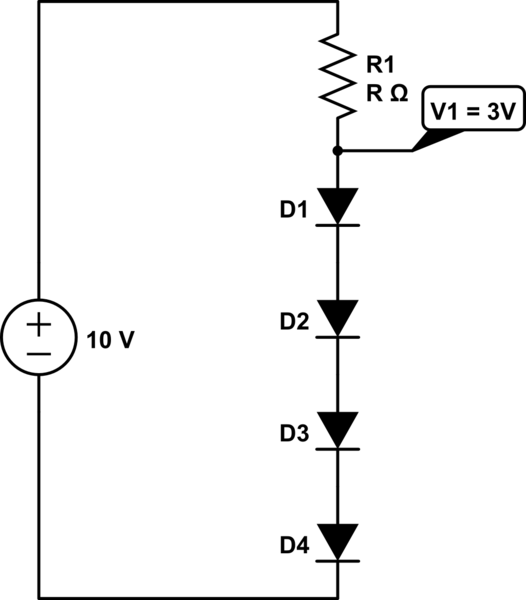
FAQ #1 – Can I operate multiple laser diodes from the same power supply?

Here at RPMC Lasers, we have over 20 years of experience helping the photonics community with their solid-state laser needs.  Over this time, we have answered a wide range of questions from both end users and system integrators, ranging from application support to laser fundamentals.  Many of the questions we have received over the years have served to influence the topics you have read about on our blog, but for the first time, we are starting a monthly blog series dedicated to frequently asked questions (FAQs) e… Read More

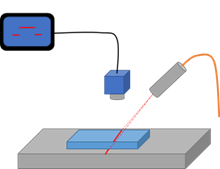
Machine Vision For Inspection

Machine vision is defined as the substitution of the human visual senses and decision-making ability, by image acquisition and computer analysis to perform an inspection task.   This process is most commonly utilized as an active imaging technology to automate inspection and analysis for process control and robot guidance in industrial applications.  As automation has become more and more prevalent in the manufacturing sector, machine vision technology has rapidly grown into one of the largest markets for laser diodes around th… Read More

Laser Diode Fundamentals – Fiber Coupling 2

In the last blog post of our laser diode fundamentals series, we discussed the basics of fiber optics concentrating on two key parameters; core diameter and numerical aperture. In this blog post, we are going to turn the discussion to fiber coupling techniques conventionally used in laser diode packaging including butt coupling, ball lens coupling, and intermediate co… Read More