
Select categoty / subcategory:

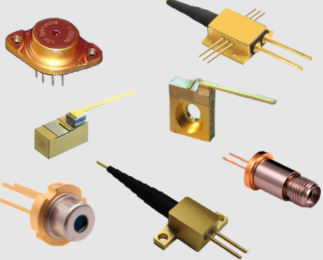
LDX Optronics: High-Power Multimode Laser Diodes for Precision Applications

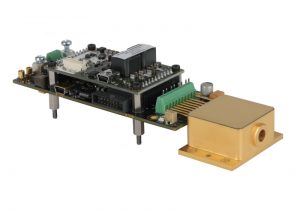
For over three decades, LDX Optronics has delivered high-power multimode laser diodes, powering cutting-edge applications in Medical, Defense, and Industrial sectors. As RPMC Lasers’ exclusive North American partner, LDX offers an unmatched range of wavelengths (400–1900 nm) and power levels (up to 40 W), with industry-leading packaging expertise. This article explores LDX’s diode solutions, their applications, and how to select the right laser for your needs, spotlighting the LDX Optronics portfolio for superior pe… Read More

Pulsed Lasers for Space: LIDAR, FSOC, and Lunar Exploration

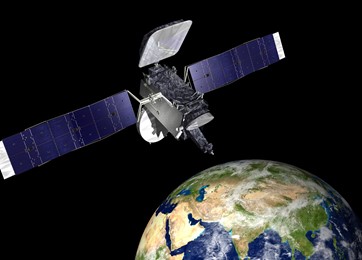
Expertise in Space and Aerospace Lasers For over 27 years, Bright Solutions has delivered customized pulsed Diode-Pumped Solid-State (DPSS) lasers, with more than 16,000 units deployed worldwide. Employing 60 professionals, including 30 laser engineers and PhDs, and holding ISO 9001:2015 certification, their expertise drives space and aerospace missions, powering LIDAR, ranging, and Free-Space Optical Communications (FSOC). Provid… Read More

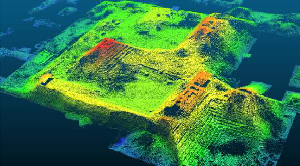
LIDAR Lasers: Precision 3D Mapping

LIDAR Lasers are used in a wide range of applications, including airborne topographic mapping, bathymetry (high-resolution mapping of the sea bottom and coastal areas), and lidar for Autonomous vehicles. The wavelength and specifications needed for these applications vary… Read More

Combustion Diagnostics: UCLA’s Quantum Cascade Laser Advancements in OH Radical Sensing

Accurate OH measurements are a growing need in combustion research, but existing sensor architectures are challenging to make economic, compact, and robust. The need for robust OH sensors is amplified in the global effort to decarbonize combustion. Many species, such as CO and CO2, have robust, high-speed laser absorption sensors targeting their fundamental vibrational bands in the mid-infrared; however, certain species like OH do not have a favorable vibrational spectrum, complicating sensing in the mid… Read More

Target Designation Laser Source Requirements

Combat zones can be extremely chaotic. With a massive influx of sensory input, implementing clear communication, rugged tools, and reliable instrumentation is key to a successful mission. One of the most challenging tasks in any aerial combat situation is determining which assets on the ground to target and which ones to avoid. Because of this challenge, a practice, commonly referred to as “painting the target,” was developed and has been successfully deployed for many years, allowing ground forces to identify and designate targets for successful engagement by aeria… Read More

Understanding Peak Power in ns and Sub-ns Lasers

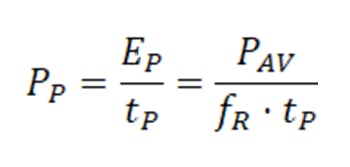
A significant and well-recognized difference between lasers and conventional, incoherent light sources, is the ability to concentrate laser emission in short pulses, with durations going down to a few femtoseconds, containing potentially only a few optical cycles. Technically, you can drive an incoherent LED source using current pulses. However, each pulse would have a maximum power (i.e. a peak power) equal to the average power of the same device if a conti… Read More

Why a Larger Beam Results in a Smaller Spot Size in Laser Designation?

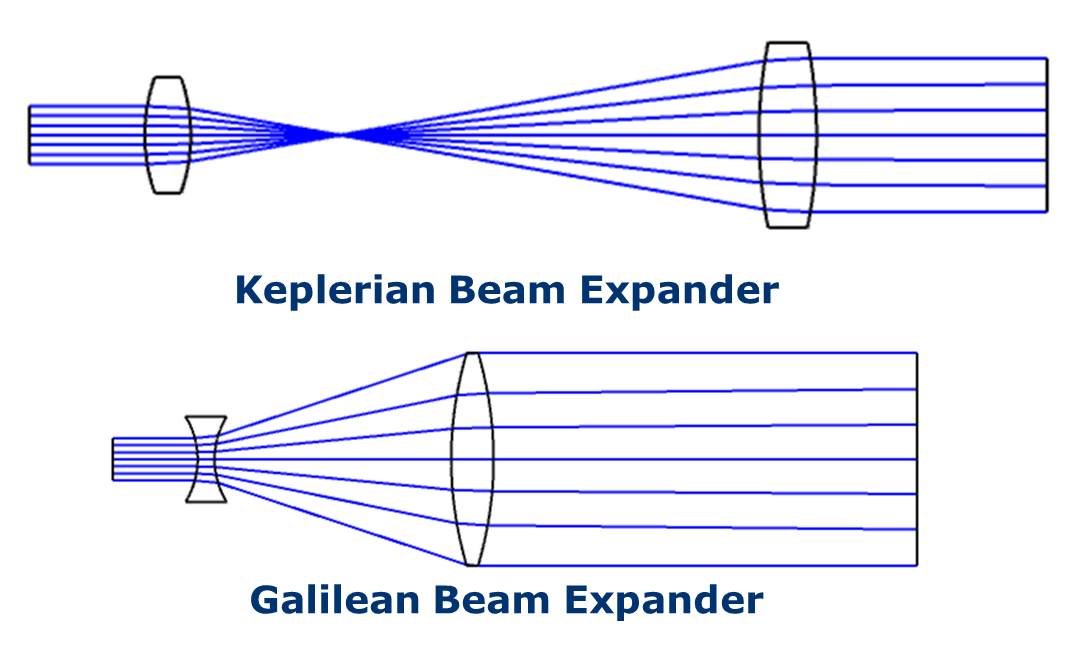
In that blog post we cited NATO standard STANAG 3733, which required that the laser beam have a divergence small enough so that 90% of its energy is on target 95% of the time assuming a 2.3 x 2.3 m target.  We went on to explain that most laser designators are designed to be used at distances up to 5 km.  Therefore, one of the most critical factors when choosing a laser source is the beam d… Read More

Space-Qualified Laser Diodes: Development, Qualification & Acceptance

For many years, space applications have steadily increased the utilization of laser diodes for various instruments (mainly pump sources for solid-state lasers). Because of this, organizations have developed qualification methodologies to ensure high levels of quality, performance, and lifetime. In recent years, increasingly complex scientific payloads have required more precise lasers for metrology, calibration, and environmenta… Read More

Microchip Lasers: Fully Integrated Modules for LIDAR & 3D Scanning

Microchip laser technology is a perfect option for various LIDAR-based applications, as well as LIBS, spectroscopy, micromachining, and more. Microchip lasers are typically compact and lightweight, allowing for easier and more efficient integration in airborne and portable, handheld applications, and the laser characteristics are in line with LIDAR requirements for collecting … Read More