
Select categoty / subcategory:

Molecular Clock Case Study: Record QCL Frequency Stabilization in Precision Metrology

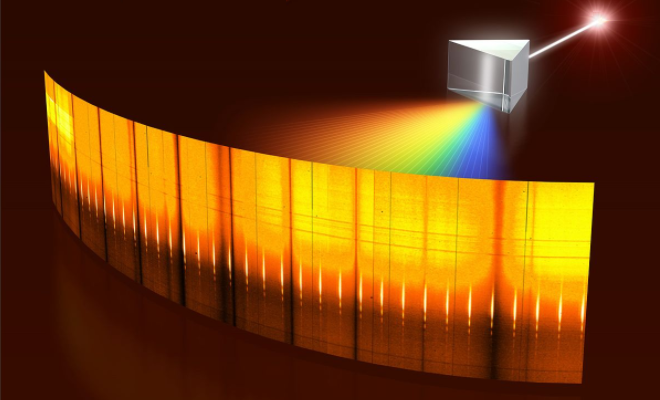
Researchers at the Laboratoire de Physique des Lasers (LPL), part of the Comomet consortium, achieved a world-record by stabilizing mirSense UniMir QCLs (10–17µm) to a relative 10⁻¹⁴ level—sub-Hz precision at 30 THz. This enables ultra-precise spectroscopy of methanol to test proton-to-electron mass ratio variations over cosmic scales, and supports studies of cold chiral molecules (enantiomers), where heavier species benefit from longer wavelengths (>10µm, ideally >15µm) for lower excitation energies and improved me… Read More
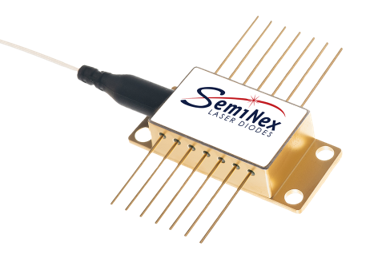
SemiNex Earns Silver Honoree in 2025 Laser Focus World Innovators Awards for High Power Narrow Linewidth ECL Laser Diode

We’re thrilled to congratulate our long-time partner, SemiNex Corporation, on receiving a Silver Honoree in the prestigious 2025 Laser Focus World Innovators Awards! Their groundbreaking High Power Narrow Linewidth External Cavity Laser (ECL) diode stood out for its superior performance, innovative design, and ability to push boundaries in photonics technology—surpassing traditional Distributed Feedback (DFB) lasers in key areas like output power and noise reduction. This award-winning ECL delivers >200 mW fiber-coupled power with an ultra-narrow <3 kHz Lorentzian linewidth, low Relative Intensity Noise (RIN), and exceptional Side Mode Suppression Ratio (SMSR). Built on SemiNex’s proprietary Gain Chips and Semiconductor Optical Amplifiers (SOAs), it offers single-frequency operation in C-band or O-band wavelengths, making it ideal for demanding applications such as: Packaged in a reliable 14-pin butterfly format (with swept-wavelength options available), … Read More

Custom Fiber-Coupled Laser Diodes for Dental OEM Systems

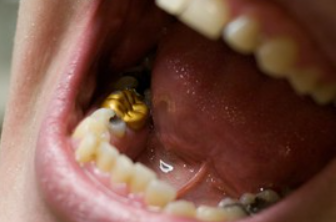
For nearly 30 years, RPMC Lasers and LDX Optronics have partnered to deliver cutting-edge laser diode solutions for the Medical Market, transforming dental systems with customized, high-power diodes. This case study showcases how our collaboration with a leading dental equipment manufacturer revolutionized soft tissue laser systems for periodontal, hygiene, and surgical applications. Explore how RPMC’s expertise and LDX’s packaging innovation can power your next project with the LDX Optronics … Read More

Top Aesthetic Laser Applications: Tattoo, Hair, and Acne Solutions

The Medical Laser Market is booming with a surge of aesthetics laser applications, driven by demand for non-invasive treatments like tattoo removal, hair removal, acne therapy, and various other applications. With over a century of combined expertise, RPMC Lasers partners with professionals to deliver tailored laser solutions for these applications. This article explores how advanced laser diodes and systems power these leading aesthetic treatments, guiding you to the right choice with RPMC’s cutting-edge… Read More

SWIR Laser Diodes for Effective Acne Treatment

Acne, affecting up to 50 million Americans annually, is the most common skin condition in the U.S., often requiring persistent treatment. Short-wave infrared (SWIR) laser diodes in the 1400–1500 nm range offer a breakthrough by targeting sebaceous glands to reduce oil production, minimizing lesions with minimal side effects. For dermatology professionals and OEM integrators, selecting the right SWIR laser diode is key to delivering effective, FDA-approved acne treatments. This article explores how SWIR diodes power acne therapy and guides you in choosing the ideal solution, spotlighting RPMC Lasers’ SWIR laser diodes for precision and reliability in the Medic… Read More

LDX Optronics: High-Power Multimode Laser Diodes for Precision Applications

For over three decades, LDX Optronics has delivered high-power multimode laser diodes, powering cutting-edge applications in Medical, Defense, and Industrial sectors. As RPMC Lasers’ exclusive North American partner, LDX offers an unmatched range of wavelengths (400–1900 nm) and power levels (up to 40 W), with industry-leading packaging expertise. This article explores LDX’s diode solutions, their applications, and how to select the right laser for your needs, spotlighting the LDX Optronics portfolio for superior pe… Read More

Supercontinuum Lasers for Precision Spectral Imaging

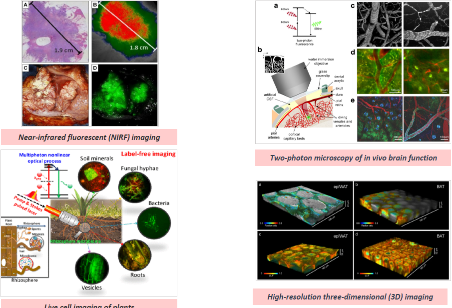
In the realm of spectral imaging, tunable lasers, with their ability to meticulously adjust their output wavelengths, serve as the cornerstone for various spectral imaging applications. From the delicate tissues of a biological specimen to the robust components of industrial machinery, tunable lasers play a key role in identifying the composition of materials and imaging intricate features. This versatility not only enhances the precision of imaging but also expands the horizons of scientific discovery and technological i… Read More

Choosing Infrared Laser Diodes for Dental Crown Troughing

Laser diodes have transformed dental procedures, particularly crown troughing, by offering fast, precise, and bacteria-eliminating solutions. For dental professionals and Medical OEM integrators selecting a laser diode, understanding the requirements for crown troughing is crucial. This article briefly explains the role of laser diodes in dental applications and outlines key considerations for choosing the right infrared laser diode, highlighting RPMC Lasers’ LDX-IR-FC fiber-coupled laser diode for optimal pe… Read More

Tunable Lasers for Photoacoustic Imaging: Precision Biomedical Solutions

Photoacoustic imaging, also known as optoacoustic imaging, is a cutting-edge biomedical technique that combines optical and ultrasonic methods to create high-resolution 3D images with chemical specificity. For researchers and OEM integrators selecting a tunable laser for this application, understanding the laser’s requirements is critical. This article explores photoacoustic imaging and outlines key considerations for choosing the right tunable laser, highlighting RPMC Lasers’ Q-Tune tunable DPSS laser for superior pe… Read More

Red Laser Diodes for Photodynamic Therapy: Precision Cancer Treatment

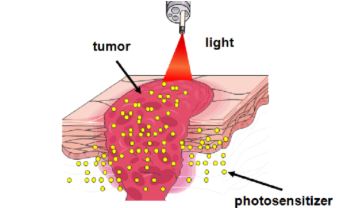
Photodynamic therapy (PDT) revolutionizes cancer treatment by using red laser diodes to activate photosensitizing drugs, offering a non-invasive alternative to surgery or radiation. For Medical & biomedical professionals and OEM integrators, selecting the right laser diode is critical for effective, targeted treatments. This article explores how red laser diodes power PDT and guides you in choosing the ideal solution, spotlighting RPMC Lasers’ LDX-VIS-FC fiber-coupled laser diode for dermal, subdermal, and endoscopic app… Read More

QCW Laser Diode Stacks for Efficient Hair Removal Systems

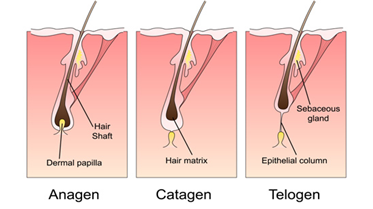
The global laser hair removal market is booming, projected to reach $2.8 billion by 2028, driven by demand for precise, non-invasive treatments. Laser diodes, holding over 39% market share as of 2020, lead this growth thanks to their efficiency, compact design, and cost-effectiveness. For aesthetic professionals and OEM integrators in the Medical Market, QCW (quasi-continuous-wave) laser diode stacks offer the perfect solution, outperforming traditional flashlamp-pumped systems like Alexandrite and Nd:YAG lasers. This article explores the principles of laser hair removal, why QCW stacks excel, and how to select the right system, spotlighting RPMC Lasers’ JOLD-Stacks for optimal pe… Read More

Tunable OPO Lasers: Q-TUNE Series for Spectroscopy and Beyond

The Q-TUNE series of tunable OPO lasers from Quantum Light Instruments offers cutting-edge solutions for advanced laser applications, including spectroscopy, photoacoustic imaging, and remote sensing. With four distinct models—Q-TUNE, Q-TUNE-IR, Q-TUNE-G, and Q-TUNE-HR—these air-cooled, user-friendly systems deliver precise wavelength tunability, high pulse energy, and reliable performance. Each model is tailored to specific research needs, ensuring flexibility and efficiency for scientists and engineers across diverse di… Read More

HeNe Lasers: Fundamentals, History & Key Considerations When Selecting

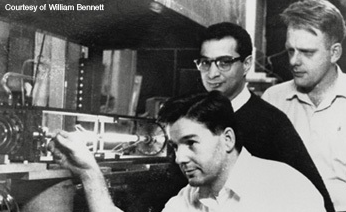
Helium-neon (HeNe) lasers are renowned for their excellent beam quality and reliability in continuous-wave (CW) operation, making them a staple in application like spectroscopy, holography, and interferometry. For professionals selecting a laser source, understanding HeNe laser technolgoy and specifications is key to choosing the right solution. This article explores the fundamentals of HeNe lasers, the history of their development, and critical considerations for selecting the ideal H… Read More

Choosing Passive vs Active Q-Switching Lasers: Solutions for High-Energy Pulsed Applications

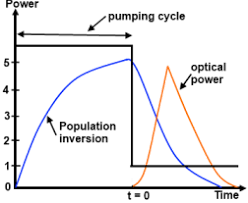
Q-switched lasers are essential for generating high-energy, short-pulse laser outputs in applications like laser machining, LIBS, and Medical procedures. Selecting the right Q-switched laser—active or passive—requires understanding their operational principles and trade-offs. This article briefly explains passive vs active Q-switching lasers and outlines key considerations for choosing the best Q-switched laser, highlighting RPMC Lasers’ solutions for y… Read More

Choosing GaN Laser Diodes for Violet, Blue, and Green Applications

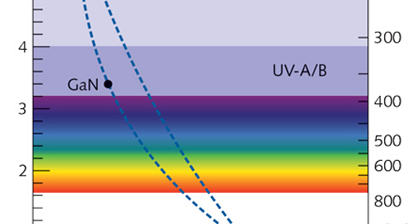
Once thought to be impossible, blue, green and UV laser diodes have now become commonplace.  These lasers are being used in a wide range of applications from blue-ray players to commercial lighting & displays to copper welding.  In this post, we are going to take a look at the underlying material properties of semiconductors, GaN in particular, and how it has led to the development of blue, green and UV las… Read More

Choosing the Right Laser for Tattoo Removal: Key Considerations

Tattoo removal is a growing industry, driven by the demand for effective and safe solutions to remove unwanted tattoos. For professionals looking to invest in a laser source for tattoo removal, selecting the right laser is critical to achieving optimal results while ensuring safety and efficiency. This article briefly explores the tattoo removal process and outlines key considerations when purchasing a laser source, highlighting specific products from RPMC Lasers that meet the needs of this application in the Medic… Read More

Pulsed Lasers for Space: LIDAR, FSOC, and Lunar Exploration

Expertise in Space and Aerospace Lasers For over 27 years, Bright Solutions has delivered customized pulsed Diode-Pumped Solid-State (DPSS) lasers, with more than 16,000 units deployed worldwide. Employing 60 professionals, including 30 laser engineers and PhDs, and holding ISO 9001:2015 certification, their expertise drives space and aerospace missions, powering LIDAR, ranging, and Free-Space Optical Communications (FSOC). Provid… Read More

LIDAR Lasers: Precision 3D Mapping

LIDAR Lasers are used in a wide range of applications, including airborne topographic mapping, bathymetry (high-resolution mapping of the sea bottom and coastal areas), and lidar for Autonomous vehicles. The wavelength and specifications needed for these applications vary… Read More

High-Precision Neural Modulation with Bright Solutions’ ‘One’ Nanosecond Laser: Photoacoustic vs. Photothermal Insights

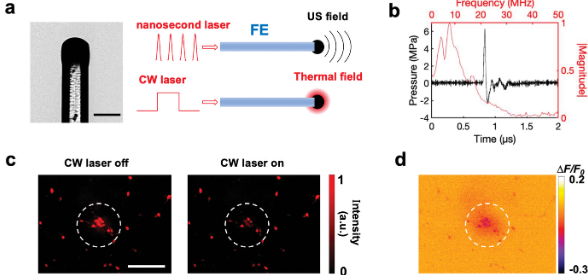
The field of neuromodulation is rapidly evolving, offering unprecedented tools to study neural mechanisms and develop therapies for neurological disorders. A recent breakthrough study explores the comparative benefits of photoacoustic (PA) and photothermal (PT) stimulation in non-genetic, high-precision neuromodulation. This research, enabled by innovative fiber emitter (FE) technology and advanced laser systems, including Bright Solutions’ ‘One’ nanosecond laser, highlights the transformative potential of PA stimulation for various Research and Medical Market app… Read More

Combustion Diagnostics: UCLA’s Quantum Cascade Laser Advancements in OH Radical Sensing

Accurate OH measurements are a growing need in combustion research, but existing sensor architectures are challenging to make economic, compact, and robust. The need for robust OH sensors is amplified in the global effort to decarbonize combustion. Many species, such as CO and CO2, have robust, high-speed laser absorption sensors targeting their fundamental vibrational bands in the mid-infrared; however, certain species like OH do not have a favorable vibrational spectrum, complicating sensing in the mid… Read More

Target Designation Laser Source Requirements

Combat zones can be extremely chaotic. With a massive influx of sensory input, implementing clear communication, rugged tools, and reliable instrumentation is key to a successful mission. One of the most challenging tasks in any aerial combat situation is determining which assets on the ground to target and which ones to avoid. Because of this challenge, a practice, commonly referred to as “painting the target,” was developed and has been successfully deployed for many years, allowing ground forces to identify and designate targets for successful engagement by aeria… Read More

Understanding Peak Power in ns and Sub-ns Lasers

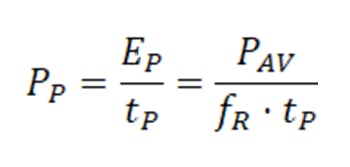
A significant and well-recognized difference between lasers and conventional, incoherent light sources, is the ability to concentrate laser emission in short pulses, with durations going down to a few femtoseconds, containing potentially only a few optical cycles. Technically, you can drive an incoherent LED source using current pulses. However, each pulse would have a maximum power (i.e. a peak power) equal to the average power of the same device if a conti… Read More