
Imaging & Analysis Lasers:

High-Resolution Imaging for Any Application

          • Precision & Multi-Wavelength Capabilities for Diverse Imaging Needs
          • Versatile Configurations & Pulse Options for Enhanced Analysis
          • Flexible Packaging & Advanced Integration Features

We’re experts at helping select the right configuration for you!

Why Choose RPMC for Imaging & Analysis Laser Sources?

helping hand holding a shield representing reliability

Precision & Multi-Wavelength Capabilities for Diverse Imaging Needs
    • Wide range of wavelengths UV-MWIR (210nm to 4.5µm) & tunable wavelength options
    • Wavelength combiners for fluorescence, microscopy, & MALDI applications
    • SLM, narrow linewidth options – Stable, reliable solutions for high-resolution requirements

settings window with slider bars and arrow cursor representing laser options and configurations

Versatile Configurations & Pulse Options for Enhanced Analysis
    • Pulsed & CW DPSS, fiber lasers, laser diode modules & broadband tunable laser systems
    • Variable rep. rates, pulse widths (ns, ps, fs) & low jitter options to support various applications
    • Range of powers/energies tailored for bioimaging, particle velocimetry & mass spectrometry

gear arrow and puzzle pieces representing highly flexible and easily integrated lasers

Flexible Packaging & Advanced Integration Features
    • OEM to turnkey, free-space & fiber-coupled options, seamless lab or field integration
    • Compact, rugged & air-cooled designs for portable needs in various environments
    • Advanced control features: USB/RS232 interfaces, modular add-ons, remote diagnostics, and simplified user control

Over the last 30 years, RPMC has fielded thousands of imaging & analysis lasers, built to endure the toughest conditions, delivering reliable performance from the shop floor to outdoor environments. Designed to withstand humidity, heat, dust, and vibration, these lasers provide consistent output with low maintenance, ensuring your operations run smoothly. With a versatile range of power, energy, and wavelength options, our lasers can be tailored to meet the specific demands of your application, from precision tasks to high-power throughput. We’re not just providing a product—we’re partnering with you to find the perfect solution and support you through every stage of your project, dedicated to helping you achieve long-term success.

Let us help define the right solution for you!

Filters Reset

Category

Type

Wavelength Selection

Picture Part Number Wavelength (nm) pa_short_description Type
FSX ultra low noise wavelength tunable femtosecond laser FSX 920, 515, 780, 1030, Multiple Wavelength Options, Tunable Fiber Laser + Microscope, fs pulsed, 780 920 or 1030nm, Tunable option, >600 mW, 100 MHz, <140fs Pulsed Fiber Lasers, Tunable Lasers, Ultrafast Lasers, Multi Wavelength, Fiber-Coupled, High Pulse Energy, High Peak Power, Low Jitter, Customizable
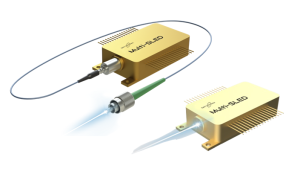
ISB1 integrated spectral bench with single SLED (superluminescent diode) ISB1 Multiple Wavelength Options Superluminescent Diode, Single-SLED, Turnkey, Broadband, CW, Center wavelength option 770-1680 nm, FWHM 15-70nm, Up to 50 mW Superluminescent Diodes (SLEDs / SLDs), Broadband Lasers, Fiber-Coupled, Turn-Key System, Customizable
ISB2 integrated spectral bench with multiple SLEDs (superluminescent diode) ISB2 Multiple Wavelength Options Superluminescent Diode, Multi-SLED, Turnkey, Broadband, CW, 2-6 SLEDs, Center wavelength option 770-1680 nm, FWHM 40-460nm, Up to 130 mW Superluminescent Diodes (SLEDs / SLDs), Broadband Lasers, Multi Wavelength, Fiber-Coupled, Turn-Key System, Customizable
ISB4 integrated spectral bench amplified spontaneous emission (ASE) source ISB4 Multiple Wavelength Options ASE Source, Turnkey, Broadband, CW, Center wavelength option 770-1680 nm, FWHM 15-70nm, 50-100 mW Amplified Spontaneous Emission (ASE) Source, Broadband Lasers, Fiber-Coupled, Turn-Key System, Customizable
ISB5 integrated spectral bench broadband tunable external cavity laser G5 ISB5 Multiple Wavelength Options Laser Diode, Turnkey, Narrow Linewidth, CW, Center wavelength option 785-1680nm, >10 mW per wavelength Broadband Lasers, Tunable Lasers, Narrow Linewidth, Long Coherence Length, Fiber-Coupled, Customizable
LGK-XXX: Ultra-Reliable He-Ne Laser Modules LGK-XXX 543, 594, 633 He-Ne Laser Module, Single mode or Multimode, 543-633nm, up to 20mW HeNe Lasers, Narrow Linewidth, Long Coherence Length, Single Longitudinal Mode (SLM), Collimated Beam, Fiber-Coupled
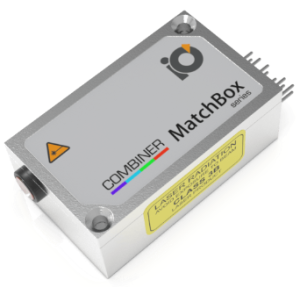
MB-Combiner: Multi-Wavelength Laser Diode Combiner MB-Combiner Multiple Wavelength Options Laser Combiner, Multimode/Single mode, up to 4 Wavelengths, 405-850nm, up to 150mW LD Module, CW DPSS Lasers, Narrow Linewidth, Long Coherence Length, Single Longitudinal Mode (SLM), Multi Wavelength, Collimated Beam, Fiber-Coupled, Customizable
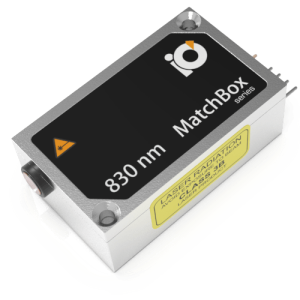
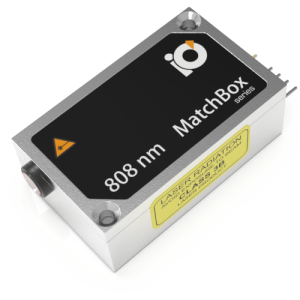
MB-IR-MM: Infrared Multimode Laser Diode Module MB-IR-MM 785, 808, 830 Laser Module, Multimode, Infrared, 785-1064nm, up to 3W LD Module, Collimated Beam, Fiber-Coupled
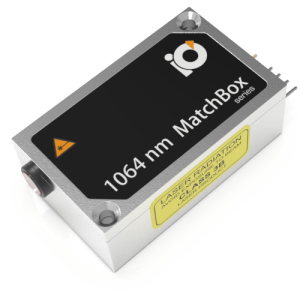
MB-IR-SLM: Infrared SLM Laser Diode Module MB-IR-SLM 785, 830, 1030, 1064 Laser Module, Stabilized, Infrared, 783-1064nm, up to 1000mW LD Module, CW DPSS Lasers, Narrow Linewidth, Long Coherence Length, Single Longitudinal Mode (SLM), Collimated Beam, Fiber-Coupled
MB-IR-SM: Infrared Single Mode Laser Diode Module MB-IR-SM 785, 808, 830, 850, 915, 975, 1064, 1123, 1310 Laser Module, Single mode, Infrared, 785-1310nm, up to 300mW LD Module, CW DPSS Lasers, Collimated Beam, Fiber-Coupled
MB-VIS-MM: Visible Multimode Laser Diode Module MB-VIS-MM 450, 638 Laser Module, Multimode, Visible, 450-638nm, up to 600mW LD Module, Collimated Beam, Fiber-Coupled, Customizable
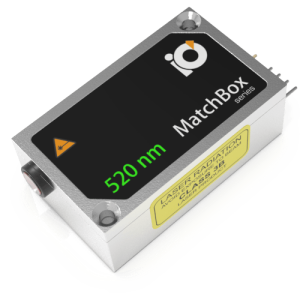
MB-VIS-SLM: Visible SLM Laser Diode Module MB-VIS-SLM 405, 488, 520, 633 Laser Module, Stabilized, Visible, 405-633nm, up to 170mW LD Module, CW DPSS Lasers, Narrow Linewidth, Long Coherence Length, Single Longitudinal Mode (SLM), Collimated Beam, Fiber-Coupled
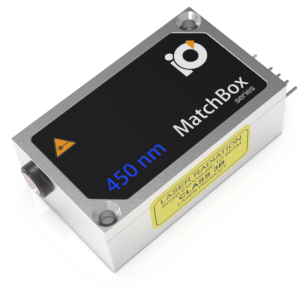
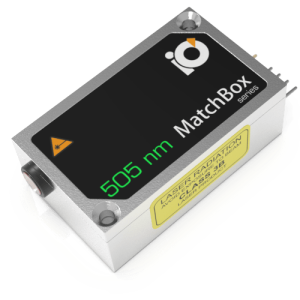
MB-VIS-SM: Visible Single Mode Laser Diode Module MB-VIS-SM 405, 488, 505, 520, 633, 660 Laser Module, Single mode, Visible, 405-660nm, up to 200mW LD Module, Collimated Beam, Fiber-Coupled
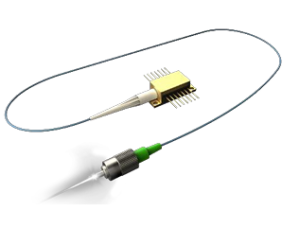
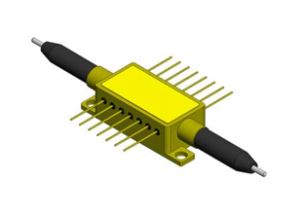
fiber-coupled 14-pin butterfly packaged superluminescent diode SLED optical spectral engine OSE1 Multiple Wavelength Options Superluminescent Diode, 14-Pin Butterfly, Broadband, CW, Center wavelength option 770-1700 nm, FWHM 10-100nm, Up to 50 mW Superluminescent Diodes (SLEDs / SLDs), Broadband Lasers, Multi Wavelength, Fiber-Coupled, Customizable
32-pin butterfly packaged 2-6 superluminescent diodes SLEDs optical spectral engine fiber-coupled and free-space configurations OSE2 Multiple Wavelength Options Superluminescent Diode, Multi-SLED, 32-Pin Butterfly, Broadband, CW, Center wavelength option 770-1680 nm, FWHM 40-460nm, Up to 130 mW Superluminescent Diodes (SLEDs / SLDs), Broadband Lasers, Multi Wavelength, Fiber-Coupled, Customizable
fiber-coupled 14-pin butterfly packaged superluminescent diode SLED optical spectral engine OSE6 Multiple Wavelength Options Laser Diode, 14-Pin Butterfly, Narrow Linewidth, CW/Pulsed, Center wavelength option 1260-1665nm, Up to 10 mW CW, 50 mW pulsed FBG, Narrow Linewidth, Long Coherence Length, Single Longitudinal Mode (SLM), Fiber-Coupled, Customizable
14-pin butterfly fiber-coupled semiconductor optical amplifer SOA package OSE7 Multiple Wavelength Options Semiconductor Optical Amplifier, SOA, 14-Pin Butterfly, CW, 770-1680nm Fiber-Coupled, Customizable
Q-DOUBLE: Double Pulse DPSS Q-Switched Laser Q-DOUBLE 263, 266, 351, 355, 526.5, 532, 1053, 1064 DPSS Laser, Double ns pulse, 263-1064 nm, up to 100Hz, up to 80mJ, up to 2W avg. power per channel Pulsed DPSS Lasers, High Pulse Energy, High Peak Power, Low Jitter, Turn-Key System, Customizable
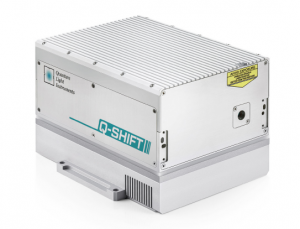
sleek, modern, light grey colored DPSS laser housing Q-SHIFT Multiple Wavelength Options DPSS Laser, ns pulsed, 291-1571nm, up to 40mJ, up to 100Hz Pulsed DPSS Lasers, High Pulse Energy, High Peak Power, Low Jitter, Turn-Key System, Customizable
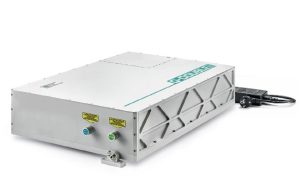
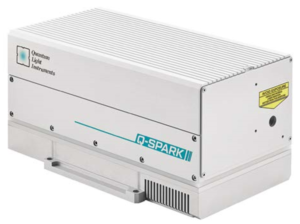
sleek modern light grey Nanosecond DPSS laser Quantas-Q-SPARK-1064 Q-SPARK 266, 355, 532, 1064 DPSS Laser, ns/ps pulsed, 266-1064nm, up to 20mJ, up to 100Hz Pulsed DPSS Lasers, High Pulse Energy, High Peak Power, Low Jitter, Turn-Key System, Customizable
Q-TUNE-HR: Tunable DPSS laser/OPO Q-TUNE-HR Tunable Tunable DPSS Laser, OPO, ns Pulsed, 750-1800 nm, up to 100 µJ, up to 100 kHz Pulsed DPSS Lasers, Tunable Lasers, Multi Wavelength, High Peak Power, Turn-Key System, Customizable
Q-TUNE-IR: Tunable IR DPSS Laser Q-TUNE-IR Tunable Tunable DPSS Laser, OPO, ns pulsed, 1380-4500nm, up to 17mJ, up to 100Hz Pulsed DPSS Lasers, Tunable Lasers, Multi Wavelength, High Pulse Energy, High Peak Power, Turn-Key System, Customizable
sleek, modern, light grey colored optical parametric oscillator OPO & DPSS laser housing Q-TUNE Tunable Tunable DPSS Laser, OPO, ns pulsed, 210-2300nm, up to 8mJ, up to 100Hz Pulsed DPSS Lasers, Tunable Lasers, Multi Wavelength, High Pulse Energy, High Peak Power, Turn-Key System, Customizable
sleek, modern, light grey colored DPSS laser housing Quantas-Q1 211, 213, 263, 266, 351, 355, 526.5, 532, 1053, 1064 DPSS Laser, ns pulsed, 211-1064nm, up to 40mJ, up to 50Hz Pulsed DPSS Lasers, Adjustable Rep Rate, High Pulse Energy, High Peak Power, Low Jitter, Turn-Key System, Customizable
Quantas-Q2-1064: High Energy, Compact, Nanosecond, DPSS Laser Quantas-Q2 211, 213, 263, 266, 351, 355, 526.5, 532, 1053, 1064 DPSS Laser, ns pulsed, 211-1064nm, up to 80mJ, up to 200Hz Pulsed DPSS Lasers, High Pulse Energy, High Peak Power, Low Jitter, Turn-Key System, Customizable
Quantas-Q2HE: High Energy, Nanosecond, DPSS Laser Quantas-Q2HE 211, 213, 263, 266, 351, 355, 526.5, 532, 1053, 1064 DPSS Laser, ns pulsed, 211-1064nm, up to 120mJ, up to 100Hz Pulsed DPSS Lasers, High Pulse Energy, High Peak Power, Low Jitter, Turn-Key System, Customizable
SL-Pico: White Light Picosecond Supercontinuum Laser SL-Pico 410-2400 Supercontinuum Laser, ps pulsed, White Light, 410-2400nm, up to 200MHz Supercontinuum Laser, Broadband Lasers, Ultrafast Lasers, Multi Wavelength, Adjustable Rep Rate, High Peak Power, Turn-Key System
sleek modern dpss laser housing, simple cubic design, black and blue TLS-Blue-Fixed-Bandwidth Tunable Tunable Supercontinuum Laser, Broadband, ps pulsed, 410-1700 nm, up to 200MHz Supercontinuum Laser, Broadband Lasers, Tunable Lasers, Ultrafast Lasers, Multi Wavelength, Adjustable Rep Rate, High Peak Power, Turn-Key System, Made in the USA
sleek modern dpss laser housing, simple cubic design, black and red TLS-Red-Tunable-Bandwidth Tunable Tunable Supercontinuum Laser, Broadband, ps pulsed, 410-1700 nm, up to 200MHz Supercontinuum Laser, Broadband Lasers, Tunable Lasers, Ultrafast Lasers, Multi Wavelength, Adjustable Rep Rate, High Peak Power, Turn-Key System, Made in the USA
Wedge: Short Pulse Q-Switched DPSS Laser Wedge 266-3100 DPSS Laser, ns/ps pulsed, 266nm to ≈ 3µm, up to 4mJ, up to 100kHz Pulsed DPSS Lasers, Airborne Laser, Ruggedized, Adjustable Rep Rate, High Pulse Energy, High Peak Power, Low Jitter

Our Imaging & Analysis Lasers offer a comprehensive selection of advanced laser sources designed for high-precision imaging and analytical applications across research and biophotonics markets. Ranging from UV to MWIR wavelengths (210nm to 4.5µm), these lasers provide tailored solutions for applications such as fluorescence lifetime imaging, MALDI-ToF mass spectrometry, medical optical coherence tomography (OCT), and particle image velocimetry (PIV). Each laser in this lineup—from compact diode modules to high-peak-power Q-switched systems—supports customizable configurations, whether adjustable pulse durations, flexible wavelength options, or many other options, enabling researchers to conduct detailed, time-sensitive analysis with unmatched accuracy.

For nearly three decades, RPMC has supplied field-proven, reliable laser systems to meet the evolving demands of the scientific community. Our laser platforms are built for effortless integration and user-friendly control, with features like USB/RS232 interfaces, remote diagnostics, and turnkey or OEM formats to meet your specific requirements. With robust, low-maintenance designs suitable for lab or field environments, we’re here to support your research advancements and innovation every step of the way.

Imaging & Analysis Applications

Fluorescence Lifetime Lasers

Fluorescence Lifetime Lasers: Fluorescence lifetime imaging microscopy (FLIM) is a method used for measuring the time a molecule spends in the excited state. Typical lifetimes are on the order of a few picoseconds to hundreds of nanoseconds depending on the molecule, therefore ultra-short pulses in the picosecond or femtosecond range are required from fluorescence lifetime lasers.

Maldi-ToF Lasers

Maldi-ToF Lasers: Maldi ToF is a method used in mass spectrometry for measuring the time it takes for ionized particles of different masses to drift to the detector.  For this process to work, there must be a mechanism in place to ionize the particles (e.g., photoionization).  This technique traditionally uses high pulse energy q-switched ultraviolet lasers (typically ns or ps pulsed, UV, green, or IR microchip lasers), because the photon energy must be greater than the ionization energy of the particle.

Particle Image Velocimetry Lasers

Particle Image Velocimetry Lasers: Particle Image Velocimetry (PIV) is an experimental method used for determining the velocity of a flowing fluid by monitoring the particles in the stream which are illuminated by a laser.  For this application to work, particle image velocimetry lasers and cameras must be time-gated and triggered at the same time so that each image can be precisely mapped to a point in time. Typically, 532nm pulsed DPSS lasers are utilized, but any pulsed visible laser should work.

Confocal Fluorescence Microscopy Lasers

Confocal Fluorescence Microscopy Lasers: Confocal Fluorescence Microscopy is a standard optical imaging technique used to increase optical resolution and contrast of a micrograph by using a spatial pinhole to eliminate out-of-focus light. This method allows for the creation of crisp, clear 3D reconstructions of biological samples. The core requirement for these lasers is high beam quality (TEM00 mode) and stable output, typically diode & CW DPSS, low noise, single-mode, visible wavelengths (e.g., 405 nm, 488 nm, 561 nm, 640 nm).

Flow Cytometry Lasers

Flow Cytometry Lasers: Flow Cytometry is a laser-based biophysical technology utilized in cell counting, cell sorting, and biomarker detection by suspending cells in a stream of fluid and passing them through an electronic detection apparatus. As cells pass the interrogation point one by one, a flow cytometry laser illuminates them, causing light scattering and fluorescence signals that are captured by detectors. This typically requires multiple stable, low noise, single-mode, visible or IR CW lasers with good beam quality operating simultaneously at specific wavelengths to excite different fluorophores attached to different cell components.

STED Microscopy Lasers

STED Microscopy Lasers: Stimulated Emission Depletion (STED) Microscopy is a super-resolution technique that overcomes the optical diffraction limit to achieve nanoscale imaging resolution. It employs a pulsed excitation laser beam and a second, typically red-shifted, STED “depletion” laser beam shaped like a doughnut. The STED laser forces fluorophores surrounding the focal point into a dark state via stimulated emission, leaving only a tiny spot of fluorescence in the center. This highly demanding application requires exceptionally stable, synchronized ps/fs pulsed lasers with ultra-low jitter, precise wavelength tunability, and specific high-power output characteristics to achieve the desired sub-diffraction resolution.

Lightsheet Microscopy Lasers

Lightsheet Microscopy Lasers: Lightsheet Microscopy (also known as Selective Plane Illumination Microscopy or SPIM) is an imaging technique that uses a thin sheet of laser light to illuminate only a thin slice of a typically large, live specimen from the side. This minimizes phototoxicity and photobleaching, allowing researchers to image delicate, living samples over long periods. Lightsheet microscopy lasers need highly uniform beam profiles delivered via fiber for flexible beam shaping, excellent power stability, and wavelengths matching common fluorescent proteins. Multiple CW or pulsed lasers across the visible spectrum are typically used simultaneously.

Two-Photon/Multi-Photon Microscopy Lasers

Two-Photon/Multi-Photon Microscopy Lasers: 2-photon/multi-photon (2P, 3P, 4P) microscopy is an advanced non-linear imaging technique often used for deep tissue imaging in biological samples (e.g., brain imaging). Instead of a single high-energy photon, the technique uses two lower-energy photons from a femtosecond pulsed laser to simultaneously excite a fluorophore. The primary requirement is a mode-locked, tunable femtosecond laser source (typically Ti:Sapphire or fiber-based systems in the near-infrared range, ~700 nm to 1100 nm) providing high peak power pulses to induce the non-linear excitation event deep within the sample.

OCT Lasers (Optical Coherence Tomography)

OCT Lasers (Optical Coherence Tomography): Optical Coherence Tomography (OCT) is a non-invasive optical imaging method that uses low-coherence light to capture micrometer-resolution, cross-sectional images of biological tissue. It functions as an optical ultrasound by measuring the echo time delay of light reflecting off different layers of tissue using interferometry. OCT lasers require broadband, stable light sources, typically swept-source lasers or superluminescent diodes (SLDs) operating in the near-infrared (800 nm to 1300 nm range) to maximize penetration depth into the tissue.

Let Us Help

With 1000s of fielded units, and over 25 years of experience, providing OEMs, contract manufacturers, and researchers with the best laser solution for their application, our expert team is ready to help! Working with RPMC ensures you are getting trusted advice from our knowledgeable and technical staff on a wide range of laser products.  RPMC and our manufacturers are willing and able to provide custom solutions for your unique application.

If you have any questions, or if you would like some assistance please contact us. Furthermore, you can email us at info@rpmclasers.com to talk to a knowledgeable Product Manager.

Check out our Online Store: This page contains In-Stock products and an ever-changing assortment of various types of new lasers at marked-down/discount prices.
We’re experts at helping select the right configuration for you!

CW Laser Blog Posts

Pulsed Lasers Blog Posts

CW Lasers White Papers

Pulsed Lasers White Papers

CW Lasers FAQs

How do I align my optical system?

How do I align my optical system?

Laser alignment can be a challenging task, but aligning a laser beam doesn’t have to be as complicated as it might seem with the right optical alignment tools and proper laser alignment techniques. Multiple optical alignment techniques have been developed over the years, utilized by technicians and engineers to simplify the alignment process. With the development of these universal laser beam alignment methods, along with some laser alignment tips and tricks, you don’t need to be a laser expert to perform your alignments with relative ease, ensuring your laser beam path is right where you want it to be and your beam is on target every time. Read our article, titled “Laser Alignment: HeNe Lasers, Methods, and Helpful Tips” to get the knowledge and advice you need for proper optical beam path alignment utilizing HeNe Lasers. Get more information from our Lasers 101, Blogs, Whitepapers, FAQs, and Press Release pages in our Knowledge Center!

Should I choose multimode or single-mode for Raman spectroscopy?

On the surface, this seems like a simple question since Raman is a nonlinear optical effect and therefore the tighter the beam can be focused the higher the conversion efficiency.  Seemingly a single-mode laser would be preferable, but in practice there are other factors that can complicate the situation. The first question you should ask yourself when considering which type of laser to choose is whether you are doing microscopy or bulk sampling.  If the answer to that question is microscopy, then you immediately should go with a single mode laser.  Since the goal of any microscopy system is to produce the highest resolution image possible, the number one consideration should be how tightly can the laser beam be focused down. However, there are several other considerations when choosing between multimode and single-mode. Learn which is best for you in this article: “Multimode vs Single-Mode Lasers for Raman Spectroscopy.” Get more information from our Lasers 101, Blogs, Whitepapers, FAQs, and Press Release pages in our Knowledge Center!

What is a CW Laser?
What is a CW Laser?

A CW or continuous-wave laser is any laser with a continuous flow of pump energy. It emits a constant stream of radiation, as opposed to a q-switched or mode-locked pulsed laser with a pulsed output beam. A laser is typically defined as having a pulse width greater than 250 ms. The first CW laser was a helium-neon (HeNe) gas laser, developed in 1960, which you can read more about in this blog “HeNe Lasers: Bright Past, Brighter Future.” If you want to read more about the types of CW Lasers we offer, check out the Overview of CW Lasers section on our Lasers 101 Page!

What is the best laser for optical surface flatness testing?

It is essential that the laser exhibit a high level of spectral stability, ensuring that any changes in the interference pattern are caused by features in the sample and not originating from the laser beam. In addition to spectral stability, high beam pointing stability ensures consistent measurements by mitigating any beam position drift concerning the position of the sample. Lasers with longer coherence lengths, and subsequently narrower linewidths, play an important role in determining the resolution of the measurement, as well as consideration of the wavelength used. Exhibiting both single longitudinal mode and single spatial mode has excellent benefits. Get more information from our Lasers 101, Blogs, Whitepapers, FAQs, and Press Release pages in our Knowledge Center!

What type of laser is best for Doppler LIDAR?

What type of laser is best for Doppler LIDAR?

Various LIDAR signal methods for measuring velocity have one critical requirement in common, the need for precise control over laser frequency. While a wide variety of single-frequency lasers have been used in Doppler LIDAR research, the industry as a whole has adopted single-frequency fiber lasers as the ideal light source. Fiber lasers have several advantages over traditional DPSS lasers, all of which derive from the geometry of the fiber optic itself, namely the innate ability to have an extremely long single-mode optical cavity. This geometry allows for the production of either extremely high-power, single-mode lasers producing unprecedented brightness, or extremely narrow band lasers, with near perfect single-frequency output. If you want to learn more about Doppler LIDAR, the critical considerations involved, and ideal laser sources, check out this whitepaper: “Single-Frequency Fiber Lasers for Doppler LIDAR.” Get more information from our Lasers 101, Blogs, Whitepapers, FAQs, and Press Release pages in our Knowledge Center!

What’s the difference between single transverse mode & single longitudinal mode?

What’s the difference between single transverse mode & single longitudinal mode?

Within the laser community, one of the most overused and often miscommunicated terms is the phrase “single mode.”  This is because a laser beam when traveling through air takes up a three-dimensional volume in space similar to that of a cylinder; and just as with a cylinder, a laser beam can be divided into independent coordinates each with their own mode structure.  For a cylinder we would call these the length and the cross-section, but as shown in the figure below for a laser beam, we define these as the transverse electromagnetic (TEM) plane and the longitudinal axis.   Both sets of modes are fundamental to the laser beam’s properties, since the TEM modes determine the spatial distribution of the laser beams intensity, and the longitudinal modes determine the spectral properties of the laser.  As a result, when a laser is described as being “single-mode” first you need to make sure that you truly understand which mode is being referred to.  Meaning that you must know if the laser is single transverse mode, single longitudinal mode, or both. Get all the information you need in this article: “What is Single Longitudinal Mode?” Get more information from our Lasers 101, Blogs, Whitepapers, FAQs, and Press Release pages in our Knowledge Center!

Pulsed Lasers FAQs

What is a Pulsed Laser?

A pulsed laser is any laser that does not emit a continuous-wave (CW) laser beam. Instead, they emit light pulses at some duration with some period of ‘off’ time between pulses and a frequency measured in cycles per second (Hz). There are several different methods for pulse generation, including passive and active q-switching and mode-locking. Pulsed lasers store energy and release it in these pulses or energy packets. This pulsing can be very beneficial, for example, when machining certain materials or features. The pulse can rapidly deliver the stored energy, with downtime in between, preventing too much heat from building up in the material. If you would like to read more about q-switches and the pros and cons of passive vs active q-switches, check out this blog “The Advantages and Disadvantages of Passive vs Active Q-Switching,” or check out our Overview of Pulsed Lasers section on our Lasers 101 Page!

What is the best laser for LIDAR?

What is the best laser for LIDAR?

There are actually numerous laser types that work well for various LIDAR and 3D Scanning applications. The answer comes down to what you want to measure or map. If your target is stationary, and distance is the only necessary measurement, short-pulsed lasers, with pulse durations of a few nanoseconds (even <1ns) and high pulse energy are what you’re looking for. This is also accurate for 3D scanning applications (given a stationary, albeit a much closer target), but select applications can also benefit from frequency-modulated, single-frequency (narrow-linewidth) fiber lasers. If your target is moving, and speed is the critical measurement, you need a single-frequency laser to ensure accurate measurement of the Doppler shift. If you want to learn more about the various forms of LIDAR and the critical laser source requirements, check out our LIDAR page for a list of detailed articles, as well as all the LIDAR laser source products we offer. Get more information from our Lasers 101, Blogs, Whitepapers, FAQs, and Press Release pages in our Knowledge Center!

What is the best laser for tattoo removal?

What is the best laser for tattoo removal?

The best laser for tattoo removal depends on factors like wavelength versatility, pulse duration, and energy output to effectively target various ink colors while minimizing skin damage. Q-switched or ultrafast lasers with pulse durations of 100 ps to 10 ns and a fluence of ~10 J/cm² are ideal for fragmenting ink via selective photothermolysis. For example, the Lampo 266-1064 nm offers multiple wavelengths (266 nm, 532 nm, 1064 nm) for multi-color tattoos, while the Nimbus 770-1064 nm provides customizable sub-nanosecond pulses for precision. The Quantas-Q1 delivers high pulse energy (up to 32 mJ at 1064 nm) for efficient treatments.

For more details on pulsed lasers for tattoo removal applications, see our blog, “Choosing the Right Laser for Tattoo Removal: Key Considerations‘! Get more information from our Lasers 101, Blogs, Whitepapers, and FAQ pages in our Knowledge Center!

We’re here to offer expert advice & to you help select the right laser for your application.
Contact Us Here or email us at info@rpmclasers.com!

What is the difference between active and passive q-switching?

There are a wide variety of q-switch technologies, but the technique as a whole can be broken down into two primary categories of q-switches, passive and active. Active q-switches could be a mechanical shutter device, an optical chopper wheel, or spinning mirror / prism inside the optical cavity, relying on a controllable, user set on/off ability. Passive q-switches use a saturable absorber, which can be a crystal (typically Cr:YAG), a passive semiconductor, or a special dye, and automatically produce pulses based on it’s design. Both passive and active q-switching techniques produce short pulses and high peak powers, but they each have their pros and cons. When choosing between actively q-switched and passively q-switched lasers, the key is to understand the tradeoffs between cost/size and triggering/energy and decide which is best for your particular application. Read more about these tradeoffs in this article: “The Advantages and Disadvantages of Passive vs Active Q-Switching.” Get more information from our Lasers 101, Blogs, Whitepapers, FAQs, and Press Release pages in our Knowledge Center!

What type of laser is used for LIBS?

A laser source used for LIBS must have a sufficiently large energy density to ablate the sample in as short a time possible. Typically, pulsed DPSS lasers take center stage here. However, it’s been shown that pulsed fiber lasers can also be a great option. For example, you could utilize fiber lasers to measure detection limits as low as micrograms per gram (µg/g) for many common metals and alloys, including aluminum, lithium, magnesium, and beryllium. Analytical performances showed to be, in some cases, close to those obtainable with a traditional high-energy Nd:YAG laser. The beam quality of fiber lasers, in conjunction with longer pulse widths, resulted in significantly deeper and cleaner ablation craters. If you want to learn more about LIBS and ideal laser sources, check out either this blog: “OEM Fiber Lasers for Industrial Laser Induced Breakdown Spectroscopy,” or this blog: “Laser Induced Breakdown Spectroscopy (LIBS) in Biomedical Applications.” Get more information from our Lasers 101, Blogs, Whitepapers, FAQs, and Press Release pages in our Knowledge Center!

Which IR laser is best for laser target designation?

There are many different types of laser designation systems used by the military today. Still, they all share the same basic functionality and outcome. At a glance, the laser requirements seem relatively straightforward. The laser needs to be invisible to the human eye, and it needs to have a programmable pulse rate. Still, when you look in more detail, many small factors add up to big problems if not appropriately addressed. Excellent divergence and beam pointing stability, low timing jitter, and rugged, low SWaP design are all critical features of a good laser designation source. Read more on these critical features in this article: “What are the Critical Laser Source Requirements for Laser Designation?” Get more information from our Lasers 101, Blogs, Whitepapers, FAQs, and Press Release pages in our Knowledge Center!